
English Curriculum
English has a pre-eminent place in education and in society. A high-quality education in English will teach pupils to speak and write fluently so that they can communicate their ideas and emotions to others and through their reading and listening, others can communicate with them. Through reading in particular, pupils have a chance to develop culturally, emotionally, intellectually, socially and spiritually. Literature, especially, plays a key role in such development. Reading also enables pupils both to acquire knowledge and to build on what they already know. All the skills of language are essential to participating fully as a member of society; pupils, therefore, who do not learn to speak, read and write fluently and confidently are effectively disenfranchised.
Please use the link to view our English Policy and Handwriting Policy.


Spelling Curriculum Map
Please select the document below.

|
Spelling Shed Curriculum Map | [pdf 374KB] |

|


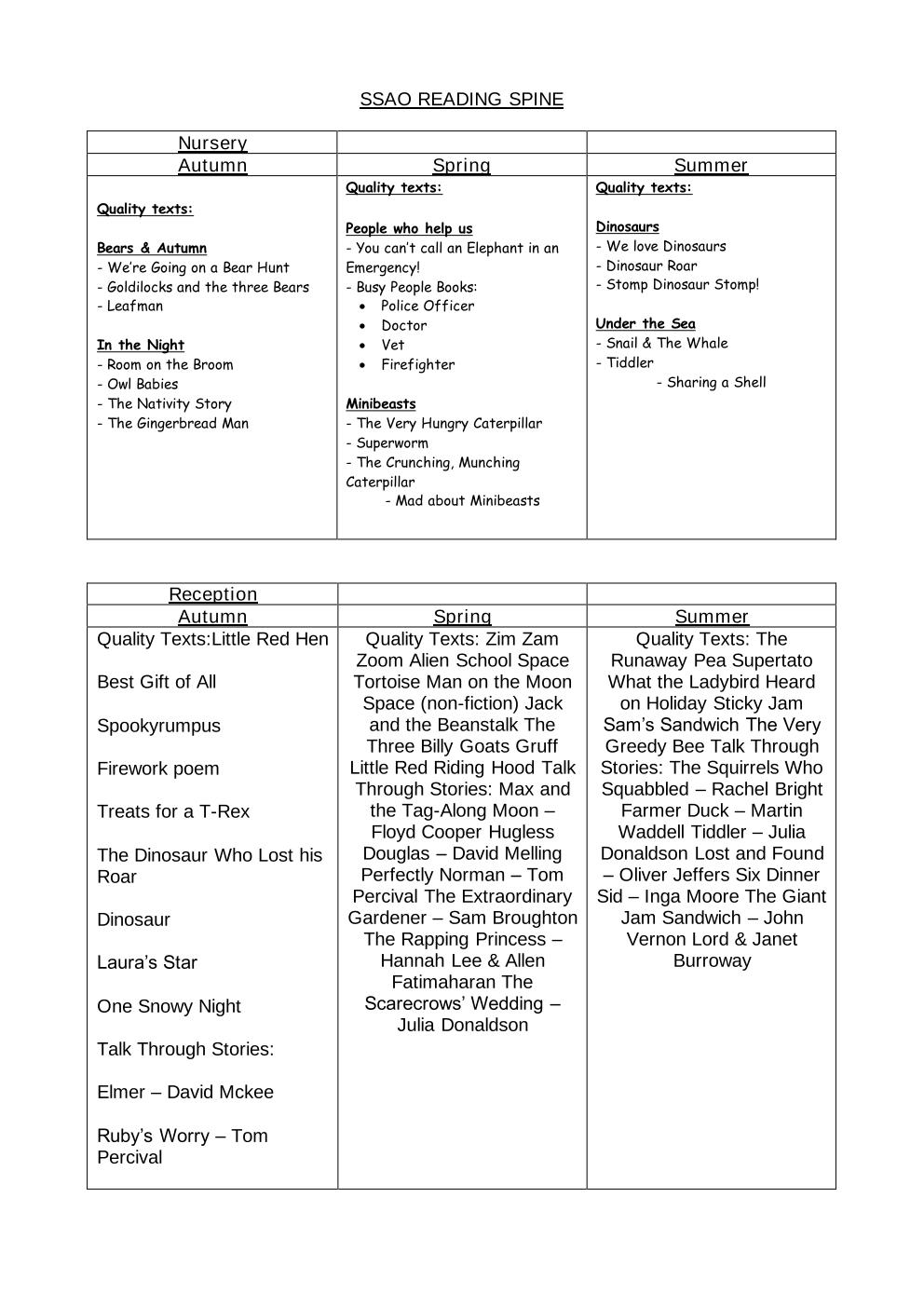

Reception Class Books
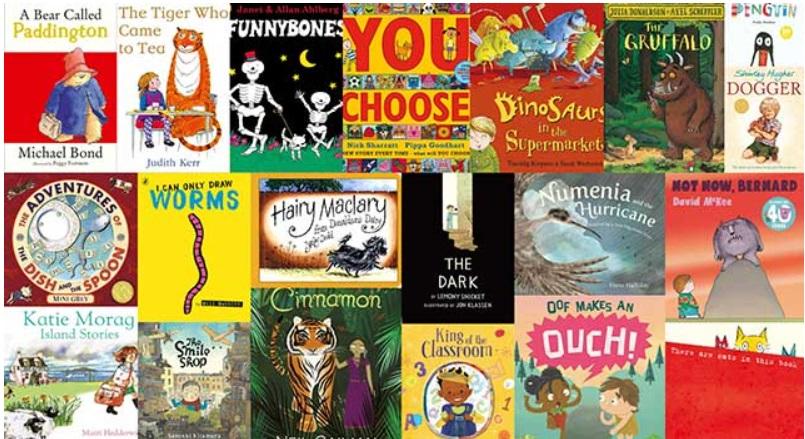
Year 1 Books

Nursery Class Books
Recommended Reading Books
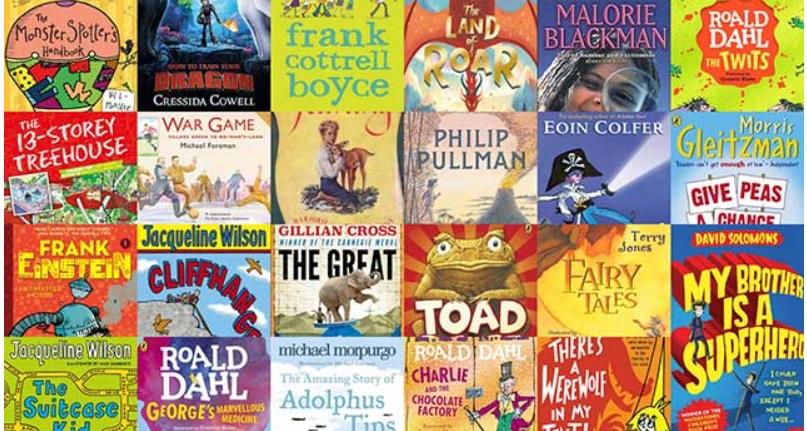
Year 4 Books

Year 2 Books

Year 3 Books
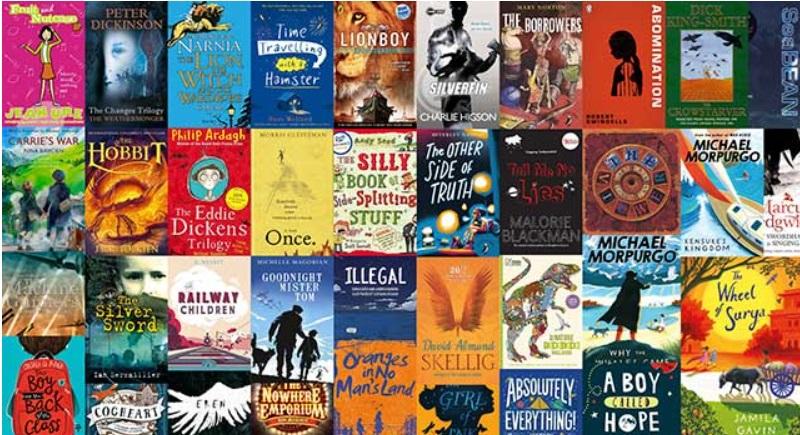

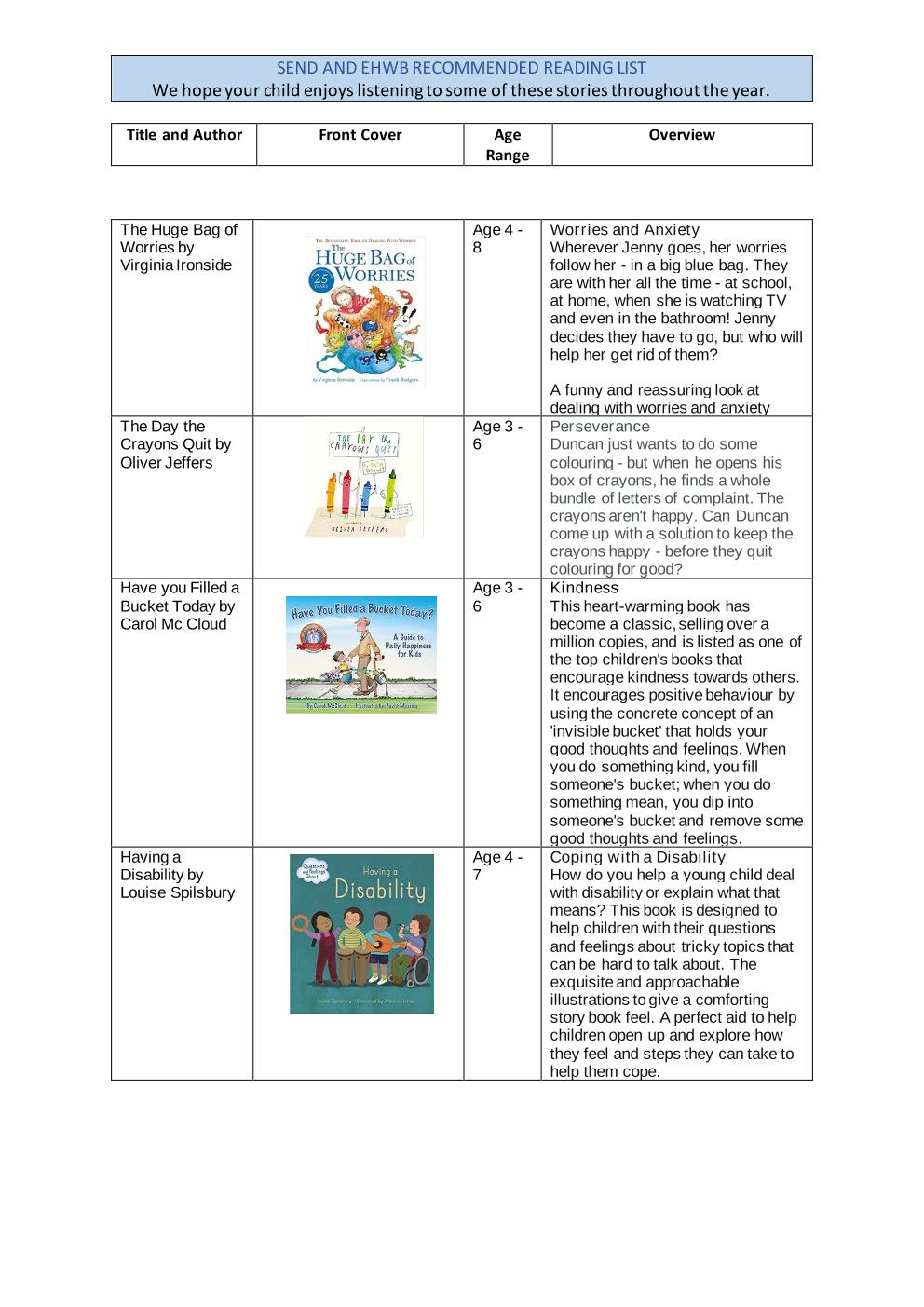
SEND and Emotional Health and Wellbeing Recommended Books
Please select the document below.
|
|
SEND and EHWB RECOMMENDED READING LIST | [pdf 597KB] |
|

Preparing for Literacy - Early Years
This guidance report offers early years professionals seven practical evidence-based recommendations to provide every child but particularly those from disadvantaged homes with quality and well-rounded grounding in early literacy, language and communication.
One recommendation focuses on the importance of high quality interactions between adults and children to develop their communication and language skills. Another suggests using a range of different activities like singing, storytelling and nursery rhymes to develop children's early reading and ability to hear and manipulate sounds. To arrive at the recommendations we reviewed the best available international research and consulted experts to arrive at key principles for preparing for literacy. This report is specific to the needs of three to five year old children. Please use the link to find out more.
Improving Literacy in Key Stage 1
This report focuses on pupils between the ages of 5 and 7 in Key Stage 1. However, it may also be applicable to older pupils who have fallen behind their peers, or younger pupils who are making rapid progress. Please use the link to find out more.
Improving Literacy in Key Stage 2
This report offers seven practical, evidence-based recommendations that are relevant to all pupils, and particularly to those struggling with their literacy. To develop the recommendations, we reviewed the best available international research and consulted experts to arrive at key principles for effective literacy teaching.
The report is one of a series of four guidance reports that the EEF has produced on the theme of language and literacy. It focuses on pedagogy and approaches to support the literacy development of pupils between the ages of seven and eleven in Key Stage 2. However, teachers may also find it useful for older pupils who have fallen behind their peers, or younger pupils who are making rapid progress. Please use the link to find out more.

English Gallery
Please click on the picture link to visit our gallery illustrating how our English curriculum is taught.

English National Curriculum
 |
English National Curriculum Key Stage 1 and 2 |